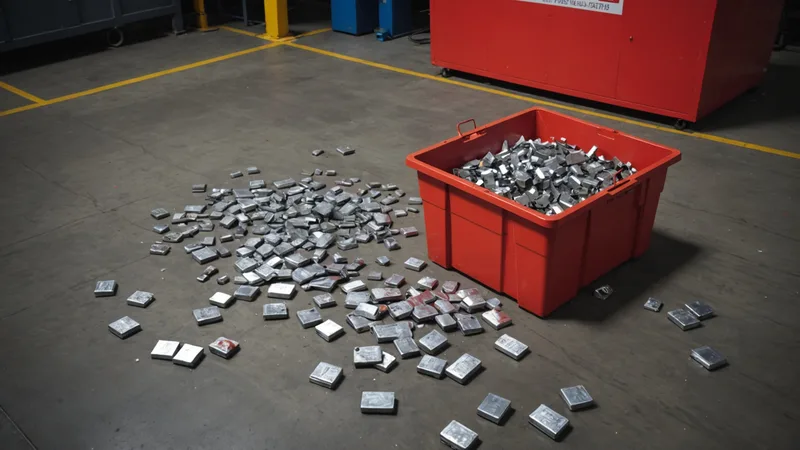
Most quality engineering discussions about defect cost start and end with the obvious numbers: rework labor hours, scrap material cost, the warranty claim frequency. These are real costs, and they're important to track. But the plants with the most mature defect-cost models have learned to account for a longer chain of consequences that starts when a defective part gets past your last inspection gate.
This is a framework for thinking about that chain. It's built from conversations with QA managers at automotive and industrial manufacturers, and from patterns we see in how plants estimate the value of improved inspection coverage. None of the numbers are universal - they vary enormously by industry, part value, and downstream process - but the structure of the analysis applies broadly.
The four cost tiers
Think about defect cost in four tiers, each representing a different containment point. The earlier a defect is caught, the lower the tier and the lower the cost. A defect that makes it past all four tiers into the field is not just the most expensive outcome - it's the one that generates systemic risk beyond the direct financial exposure.
Tier 1 is inline detection: the defect is caught at the press, the weld cell, or the machining center that produced it. Cost at this tier is typically just the part and a fraction of the machine time. If you're doing inline AI inspection, this is where most defects are caught. Cost range: $5 to $50 per defective part, depending on material cost and cycle time.
Tier 2 is end-of-line or pre-shipment inspection: the defect gets past the production station and is caught before the part ships. At this point you've added value to the part through downstream operations. Rework may be possible on some defect types; others are scrapped at full value. Labor cost for inspection and handling compounds the material loss. Cost range: $40 to $400 per defective part.
Tier 3 is incoming inspection at the customer: the defect ships and is caught by your customer's receiving or line-feed inspection. Now you have containment costs, potential premium freight for replacement parts, a formal supplier corrective action request, and damage to your approved supplier status. Cost range: $300 to $3,000 per incident, often charged back plus administrative overhead.
Tier 4 is field escape or in-process assembly failure at the customer: the defect reaches your customer's production line or, worse, the end product in the field. At this tier you're looking at line stoppage charges, warranty claim processing, potential recall costs, and long-term customer relationship damage. Cost range: $2,000 to $50,000+ per incident in automotive; multiples higher in aerospace or medical device.
The multiplication factor problem
What makes tier 4 costs disproportionate is not just the direct expense but the multiplication factor. A single defective part that causes a line stoppage at a large automotive OEM can generate a stoppage charge that exceeds your total annual margin on that part number. A warranty recall triggered by a batch of defective components can affect 10,000 or 100,000 vehicles built over months before the root cause is identified.
The ratio of tier-4 cost to tier-1 cost typically runs between 100:1 and 1000:1 in automotive manufacturing. That ratio is the core business case for any inspection investment: if catching a defect inline costs $20 in inspection system amortization and it prevents a single tier-4 incident that costs $20,000, you've justified the inspection system with 1,000 defects avoided per incident prevented.
The catch is that tier-4 incidents are relatively rare, which makes them hard to budget against. The plants that make the best economic arguments for inline inspection calculate a probability-weighted cost across all four tiers, not just the visible ongoing costs. If your tier-4 incident rate is one per quarter and the average cost is $15,000, your expected quarterly tier-4 exposure is $15,000. If better inspection reduces that incident rate by 80%, you've avoided $12,000 per quarter in expected cost. That's $48,000 per year in expected value - often more than the annual cost of a camera inspection system on a single line.
Hidden costs in tiers 1 and 2
Even the lower tiers have costs that most plants undercount. In Tier 1, the most underestimated cost is inspector attention degradation. A human QA inspector doing 100% visual sampling on a high-volume line for an eight-hour shift has degraded detection accuracy by hour six that no training regimen fully corrects. The false-negative rate of a fatigued inspector is not a fixed number; it's a function of time-on-task, shift time, ambient conditions, and part complexity. That degradation is not typically in your defect rate data because fatigued inspectors don't flag their own accuracy drop.
In Tier 2, the underestimated cost is the schedule and batch interaction effects. A defect discovered at end-of-line inspection doesn't just cost the part. It often triggers a hold and re-inspection of all parts produced in the same window, which holds outbound shipment, which creates schedule risk on the customer's build plan, which may generate expediting pressure and premium freight on the next shipment. The direct cost of one defect triggers a cost cascade through your scheduling and logistics that's rarely attributed back to the quality event that started it.
Building the model for your facility
Start with the numbers you have: what is your current defect escape rate to tiers 3 and 4 per year? If you don't have that number, start tracking it immediately. The incident log from your customer complaint system and your corrective action records are usually sufficient to reconstruct a two-year history.
Assign a cost estimate to each tier-3 and tier-4 incident from the past two years. Include direct charges, containment labor, rework, premium freight, and an estimated fraction of the relationship cost if you can quantify it. Calculate the average and the variance.
Then estimate your current tier-1 and tier-2 defect rates from your internal scrap and rework records. Calculate the cost per defect at each tier using your actual labor and material rates, not industry averages. The result is a four-tier expected cost model for your current inspection capability.
From there, the incremental value of any inspection improvement is the expected reduction in cost across all four tiers. A camera inspection system that catches 85% of defects inline (that currently escape to tier 2 and beyond) reduces your expected cost by 85% of whatever you're currently spending in tiers 2, 3, and 4. Run that number. It's usually larger than the capital cost of the inspection system by a factor of two to five over a three-year horizon on a high-volume line.
The conversation about inspection investment gets a lot cleaner when you're comparing known four-tier expected costs to known system costs, rather than defending a capital request with "we need better quality."